


Why Industrial-Grade Plastic Seed Trays Outperform Standard Trays
2026-06-11 16:54:48
Introduction
Growing healthy seedlings begins long before seeds are placed into soil. The seed tray you choose shapes every stage of early plant development—from germination rates to root architecture at transplant time. Whether you operate a large commercial nursery or manage a small greenhouse operation, selecting the right tray can directly influence yield consistency and overall crop quality. The principles examined here draw on horticultural science research and manufacturer field experience to provide commercial growers with an evidence-based framework for seed tray decision-making.
Commercial seedling production is a precision operation where the choice of growing container directly affects the efficiency of every downstream process. Trays that are well-matched to their intended crop and growing conditions support uniform germination, healthy root development, and efficient transplant operations. Trays that are poorly matched create problems—root binding, uneven growth, transplant shock—that cost more to fix than the marginal price difference between a premium and an economy tray.

Material Composition and Impact Resistance
The raw material used in plastic seed tray manufacturing determines nearly every performance characteristic of the final product. Most commercial trays are manufactured from polypropylene copolymer (PP) or high-impact polystyrene (HIPS), each with distinct property profiles. Polypropylene offers superior impact resistance and retains structural integrity across a wide temperature range, making it the preferred choice for trays used in heated greenhouses and outdoor nursery environments. High-impact polystyrene provides greater stiffness and dimensional precision, which benefits automated seeder systems where cell alignment tolerances are tight. Material grade selection is not simply a cost optimization exercise. A manufacturer that sources lower-grade polymer resins to reduce unit cost delivers a tray that looks identical to a premium product but fails prematurely under production conditions. Commercial buyers should request material specification sheets from suppliers and verify that polymer grades meet the requirements of their specific growing environment.
UV Stabilization for Long-Term Outdoor Use
Ultraviolet degradation is the primary mechanism of failure in plastic trays used in outdoor or high-UV greenhouse environments. Without UV stabilization, polypropylene and polystyrene plastics absorb UV radiation that breaks polymer chain bonds, causing progressive embrittlement, surface cracking, and eventual structural failure. This degradation is accelerated in tropical and high-altitude climates where UV intensity is elevated, and in greenhouses using polycarbonate or glass glazing that transmits UV wavelengths. UV stabilization is achieved through additive packages that either absorb UV radiation and dissipate it as heat (UV absorber additives) or neutralize radicals formed during UV exposure (hindered amine light stabilizers, known as HALS). HALS-based stabilization provides longer-term protection and is preferred for trays expected to endure multiple seasons of outdoor use. A manufacturer specifying the appropriate stabilizer grade and loading concentration for the intended use environment ensures that the tray retains mechanical integrity throughout its designed service life. Field testing under actual use conditions is the definitive validation for UV stabilization performance. Accelerated weathering tests in laboratory chambers simulate multiple seasons of UV exposure in compressed timeframes, but real-world validation across different climate zones remains the gold standard. Growers in high-UV environments should request weathering test data from manufacturers before committing to a supplier.
Flexural Strength and Structural Engineering
Flexural strength—the ability of the tray material to resist deformation under load—is critical during tray handling, stacking, and filled-cell transport. Trays that sag between bench supports under the weight of wet growing medium create uneven surfaces that affect irrigation distribution and plant uniformity. In automated handling systems, flexural rigidity must be consistent across the entire tray surface to prevent jam events on conveyors and in gripper mechanisms. Structural engineering of the tray walls and ribs contributes to overall load-bearing performance independently of raw material properties. Thick-walled trays with integrated rib structures can achieve superior load ratings using standard polymer grades, while thin-walled trays without ribbing may fail under loads that would be easily handled by a more structurally sophisticated design. A manufacturer investing in structural engineering rather than simply adding material thickness produces a lighter, more cost-effective tray with equivalent or superior performance.
Reusability Cycles and Cost Efficiency
A properly manufactured tray made from UV-stabilized polypropylene copolymer can realistically withstand 10 to 15 production cycles with appropriate cleaning and storage between uses. In high-volume commercial operations running multiple crops per year, this durability translates to a per-plant tray cost that can fall below 0.05 dollars per cell—a compelling economic argument for investing in durable, quality-manufactured trays rather than economy alternatives that degrade after two or three cycles. The total cost of ownership calculation is the appropriate framework for comparing tray options. Initial unit price is only one component; the other factors are reuse cycle count before replacement, cleaning and maintenance cost, failure rate during handling, and performance consistency across cycles. A manufacturer that provides genuine performance data across multiple reuse cycles enables buyers to make this calculation accurately, rather than relying on the misleading metric of purchase price alone.
Industry Testing Standards for Commercial Trays
Commercial horticultural tray manufacturers typically subject their products to a battery of standardized performance tests before releasing them to the market. These tests may include flexural modulus measurement under the ASTM D790 standard, Izod impact testing under ASTM D256, UV weathering exposure per ASTM G154, and dimensional tolerance verification. The specific test battery varies by manufacturer and by tray grade, but the existence of a formal testing protocol is a meaningful indicator of quality commitment. Buyers should request test data and material data sheets (SDS and TDS documents) as part of their supplier qualification process. A manufacturer willing to share this data demonstrates confidence in its product and transparency about performance characteristics. Suppliers that decline to provide specification data or offer only marketing materials without technical backing are signals of lower quality assurance standards.
Conclusion
Commercial growers who invest time in understanding tray specifications and matching them to their specific production requirements consistently outperform those who purchase on price alone. The right tray supports every stage of the seedling production cycle—from initial sowing through field transplant—and pays dividends in reduced crop losses, lower labor inputs, and more consistent harvest timing. Whether you are sourcing trays as a first-time commercial buyer or reviewing your current supplier against market alternatives, the principles outlined here provide a framework for making evidence-based decisions that protect your production outcomes.
Royal Horticultural Society (RHS). (2023). Commercial Propagation and Seedling Production Guidelines. RHS.
University of California Agriculture and Natural Resources (UC ANR). (2022). Propagation of Nursery Crops: Principles and Practices. UC ANR Publications.
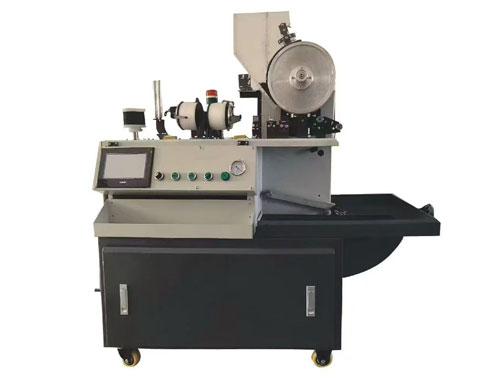
The CNC Seed Braiding Machine is a high-precision, fully automated agricultural equipment s...
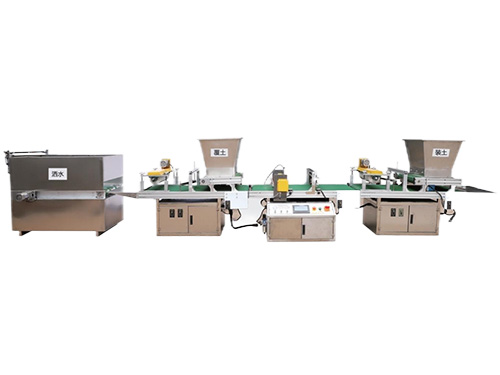
It adopts electrical integration and can be started by pressing the fully automatic button ...
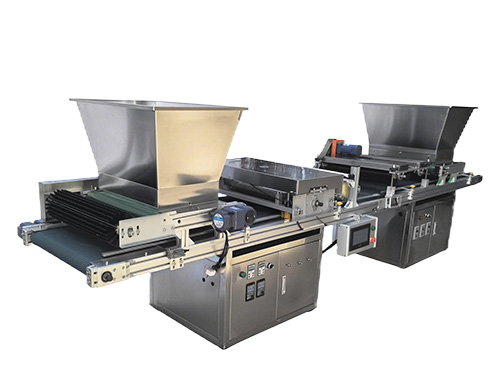
The XP750 seeder has stable performance, excellent product quality, simple and convenient o...
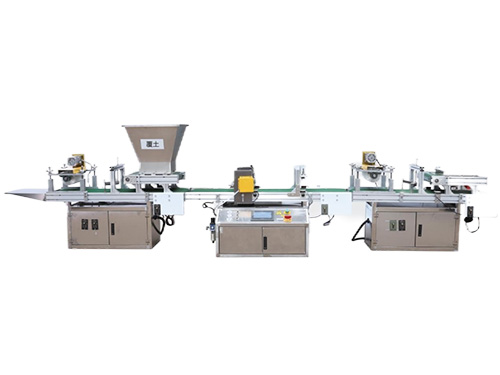
It adopts electrical integration and can be started by pressing the fully automatic button ...