


136-Cell Seedling Trays for High-Density Vegetable and Rice Plug Production
2026-10-18 15:38:17
In high-density plug production, the question is rarely how many seedlings a tray can hold — it is how uniformly it can hold them. The 136-cell seedling tray sits in the sweet spot for vegetable and rice nurseries that need meaningful density without pushing cell volume so low that plugs dry out within hours. Its cell geometry gives enough medium per plug for a stable root ball while keeping tray count, bench space and freight cost per thousand seedlings under control.

The operational advantage of this configuration shows up most clearly under high temperature. When a greenhouse pushes past 30 °C, small-cell trays lose moisture rapidly and irrigation frequency climbs. A 136-cell layout with correctly sized drain holes retains enough moisture to buffer the midday peak, yet still drains freely enough to avoid the waterlogging that drives root rot.
This guide covers how 136-cell trays behave in real nursery conditions, which crops suit the format, how they pair with automatic seedling seeders, and what to check before ordering wholesale seedling trays in bulk.
Why 136 Cells Works for High-Density Production
Cell count is a compromise between three variables: root volume per plug, plants per square metre of bench, and trays per pallet. Moving up from a 72-cell tray to a 136-cell tray roughly doubles plant density per tray; moving to 200 cells and beyond pushes root volume down to the point where irrigation tolerance becomes the limiting factor.
For nurseries producing short-cycle vegetable plugs or rice seedlings for mechanical transplanting, 136 cells typically delivers the best balance — enough medium for a coherent root plug that holds together at transplanting, without the moisture management burden of ultra-high-density formats.
Density without fragility: roughly double the plugs per tray compared with standard 72-cell formats.
Coherent root plugs: sufficient medium volume for plugs to hold together during mechanical transplanting.
Moisture buffering: cell volume retains enough water to survive the high-temperature midday peak.
Freight efficiency: more plants per pallet lowers landed cost per thousand seedlings.
Drainage and Moisture Behaviour Under High Temperature
Drainage design is where a 136-cell tray either succeeds or fails. Each cell needs a drain hole sized to release free water quickly while retaining the capillary moisture the medium holds. Too small and the cell stays saturated, cutting oxygen to the root zone; too large and the plug dries out unevenly across the tray.
Under high temperatures, water movement through the tray is dominated by evaporation from the cell surface. Growers running 136-cell trays in hot seasons should pair them with a drainage mat or capillary mat system, which supplies moisture from below and evens out the dry-down rate between edge cells and centre cells.
Crop Matching: What Belongs in a 136-Cell Tray
| Crop | Suitability in 136-cell trays | Notes |
|---|---|---|
| Leafy vegetables and brassicas | Excellent | Short cycle, tolerates moderate root volume |
| Rice for mechanical transplanting | Excellent | Supports the uniform mat-type seedling machines require |
| Onion and leek | Good | Small seed, moderate cell volume is sufficient |
| Tomato and pepper | Conditional | Use only for short holds; prefer 50–72 cells for long cycles |
| Strawberry plug production | Not recommended | Use dedicated deep strawberry seedling trays |
| Tree and forestry seedlings | Not recommended | Deep cells and air pruning are required |
Seeder Compatibility and Automation
Automatic seedling seeders depend on dimensional repeatability. If tray length, width or cell pitch varies between batches, the seeding head either misses cells or double-drops seed — both of which produce gaps that must be hand-filled later.
When evaluating a seedling tray manufacturer for automated lines, ask for dimensional tolerance in writing and run sample trays through your own seeder before committing to a bulk order. Trays should also stack and de-stack cleanly, since automatic de-stacking is a common failure point with thin-walled trays that flex.
What to Verify Before Ordering Bulk Seedling Trays
Material grade and wall thickness tolerance — the two variables that drive reuse life.
Cell pitch and overall tray dimensions, matched to your seeding and transplanting equipment.
Drain-hole geometry, matched to your irrigation method.
Stacking strength under load, so palletised trays do not deform in transit.
Factory capacity and buffer stock for your peak-season volume.
Sample availability for trial runs before the bulk order.
Frequently Asked Questions
Conclusion
The 136-cell seedling tray is a density decision that pays off when cycle length, irrigation control and seeding automation all support it. Get those three aligned and the format lowers cost per thousand seedlings without sacrificing plug quality.
Haode manufactures 136-cell seedling trays along with 100-cell, 72-cell, 50-cell and deep-cell formats, supplying nurseries and rice operations worldwide at factory-direct prices.
References
GB/T 7714: Effects of Cell Volume and Density on Plug Seedling Quality and Field Performance. Chinese Journal of Rice Science
MLA: Comparative Evaluation of High-Density Plug Trays for Vegetable Transplant Production. Horticultural Science & Technology
APA: Irrigation Uniformity and Edge Effects in High-Density Seedling Tray Systems. Journal of Horticultural Research
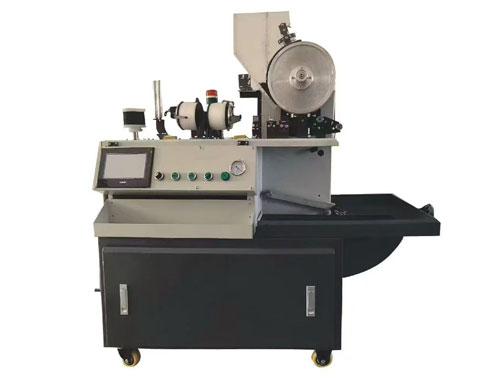
The CNC Seed Braiding Machine is a high-precision, fully automated agricultural equipment s...
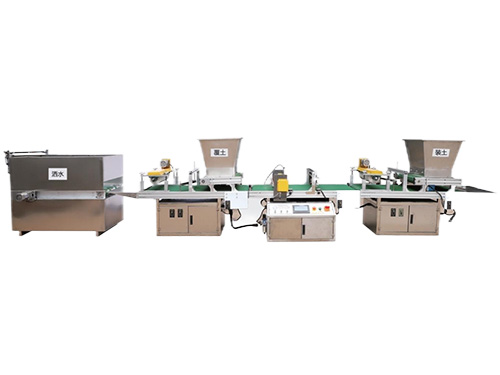
It adopts electrical integration and can be started by pressing the fully automatic button ...
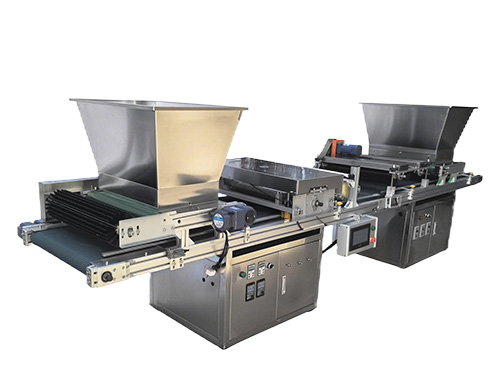
The XP750 seeder has stable performance, excellent product quality, simple and convenient o...
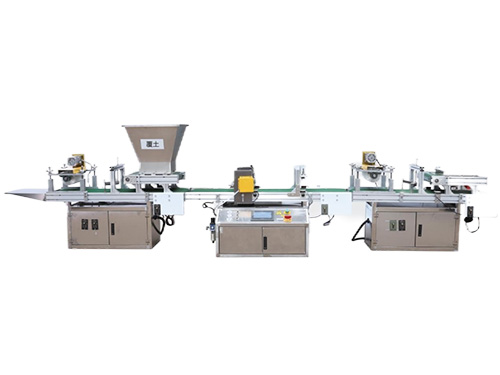
It adopts electrical integration and can be started by pressing the fully automatic button ...