


High Quality PET Seedling Trays: Reusable, Transparent, and Factory-Direct for Professional Growers
2026-10-16 15:16:53
In commercial propagation, the tray is not a passive container — it is the first production decision that determines germination uniformity, root architecture and transplant survival. High quality PET seedling trays have become the standard tool in this environment because they solve three problems at once: they survive repeated production cycles, they let growers see root development without disturbing the plug, and they hold dimensional accuracy well enough to run through automatic seedling seeders without jamming.

The challenge most nurseries face is not the tray itself but the cost of getting it wrong. Thin, low-grade trays warp under stack load, crack in cold-season handling, and deform after two or three steam-sanitizing cycles. Every warped tray translates into uneven seeding depth, skipped cells on the seeder line, and plugs that dry out faster than their neighbours — losses that rarely show up as a line item on a purchase order.
This guide explains what makes a PET seedling tray genuinely reusable, how transparency supports crop monitoring, which cell counts suit which crops, and how to evaluate a seedling tray manufacturer for factory-direct supply. For procurement managers weighing unit price against replacement cost, the framework below separates real specification from marketing language.
What Makes a PET Seedling Tray Different
PET (polyethylene terephthalate) is a food-grade, non-toxic polymer with high tensile strength and excellent dimensional stability. In a seedling tray, those properties matter in three specific ways: the cell wall resists deformation under stack load, the material tolerates repeated hot-water and sanitizer exposure, and the sheet thickness can be thermoformed into deep, uniform cells with consistent drain-hole geometry.
By contrast, thin polystyrene or recycled-blend trays lose shape after a few cycles. Once a tray bows, the growing medium volume per cell changes, seeding depth shifts, and germination becomes uneven — the single most common cause of batch variability reported by plug producers.
Food-grade safety: non-toxic material suitable for vegetables, herbs and microgreens, with no harmful leaching into the growing medium.
Dimensional stability: consistent cell geometry keeps seeding depth and medium volume uniform across the whole tray.
Impact resistance: survives stacking, transport and cold-season handling without cracking.
Chemical tolerance: withstands standard sanitizing solutions used between production cycles.
Recyclability: PET is widely recyclable, supporting sustainability reporting for commercial growers.
Why Reusable Beats Disposable on Cost Per Seedling
Unit price is the number buyers see; cost per seedling over five seasons is the number that matters. A reusable seedling tray that survives repeated cycles spreads its purchase price over thousands of plugs, while a disposable tray is paid for every single round. When sanitizing labour and disposal fees are included, the reusable option usually wins well before the end of the second season.
There is also a hidden scheduling benefit. Nurseries running high-frequency seeding cycles cannot afford tray shortages during peak windows. A durable tray inventory is a fixed asset that keeps production on schedule instead of a consumable that must be re-ordered and re-qualified every season.
| Factor | Reusable PET seedling trays | Disposable thin trays |
|---|---|---|
| Purchase frequency | Once per several seasons | Every cycle |
| Cost per seedling | Falls sharply with reuse | Constant, never recovers |
| Seeder compatibility | Stable dimensions, fewer jams | Warping causes skipped cells |
| Sanitizing tolerance | Tolerates hot water and standard sanitizers | Distorts or cracks |
| Disposal burden | Recyclable at end of life | Continuous waste stream |
| Germination uniformity | Consistent cell volume | Varies as trays deform |
The Practical Value of Transparent Seed Trays
Transparent seed trays turn root monitoring into a visual task. Instead of knocking plugs out to check rooting, growers assess root mass and moisture directly through the cell wall. That single capability changes three routines: irrigation is triggered by visible moisture rather than a fixed schedule, transplanting is timed to visible root development rather than a calendar date, and problems such as waterlogging or root binding are caught days earlier.
For home gardeners and school projects the same property is educational — seedlings can be watched from the first radicle to a fully formed root plug without disturbing the medium.
Choosing the Right Cell Count
Cell count sets root volume per seedling, which sets how long a plug can be held before transplanting. Small cells suit short-cycle crops and high-density production; deep, large cells suit crops that resent root disturbance or that stay in the tray for many weeks.
| Cell count | Typical crops | Hold time in tray |
|---|---|---|
| 100-cell / 136-cell | Vegetable plugs, rice, high-density nursery work | Short to medium |
| 72-cell / 105-cell | Tomato, pepper, brassicas | Medium |
| 50-cell | Tomato, pepper, larger vegetable transplants | Medium to long |
| 32-cell / 24-cell | Melons, squash, large-rooted transplants | Long |
| Strawberry / deep trays | Strawberry runners, plug production | Long |
How to Source Seedling Trays Directly From the Factory
Factory-direct sourcing removes distributor markup and, more importantly, gives you control over specification: material grade, wall thickness, cell geometry, drain-hole design, colour and custom logo. For commercial volumes, that control is worth more than a small price concession.
A credible seedling tray manufacturer should be able to provide material certification, sample trays for trial runs, dimensional drawings, and evidence of compatibility with automatic seeding equipment. Confirm minimum order quantity, lead time, and whether the factory can hold buffer stock for your peak season.
Request material certification and food-grade documentation.
Test sample trays on your own seeder and sanitizing line before committing.
Confirm cell count, colour, thickness and custom branding options.
Agree on packing method — stack height and carton strength affect landed condition.
Verify the factory can support repeat orders with consistent tooling.
Frequently Asked Questions
Conclusion
High quality PET seedling trays are a production tool, not a consumable. Choosing the right material grade, cell count and drain-hole design lowers cost per seedling while improving germination uniformity and transplant survival — the two metrics that actually determine nursery profitability.
For nurseries and farms looking for durable, food-grade PET trays at factory price, Ningjin County Haode New Material Co., Ltd. manufactures a full range of seedling trays, drainage mats and seeding equipment in Hebei, China, and ships worldwide. Visit haodeseedtray.com to review specifications and request samples.
References
GB/T 7714: Life Cycle Assessment of PET Trays for Horticultural Use: Sustainability, Durability, and Functional Performance. Journal of Sustainable Materials and Technologies
MLA: Performance Evaluation of PET Seedling Trays: Durability, Water Resistance, and Reusability in Nursery Operations. Horticultural Science & Technology
APA: ASTM D4101-22: Standard Specification for Polyethylene Terephthalate (PET) Plastic Sheeting, Film, and Strip. ASTM International Standards Journal
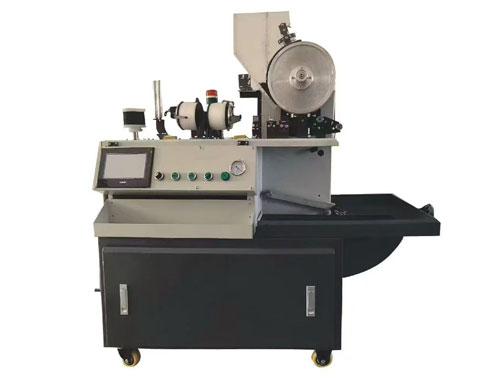
The CNC Seed Braiding Machine is a high-precision, fully automated agricultural equipment s...
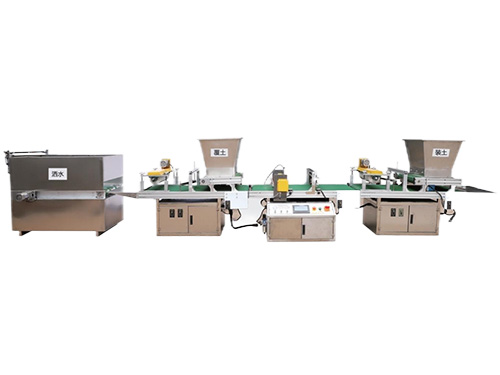
It adopts electrical integration and can be started by pressing the fully automatic button ...
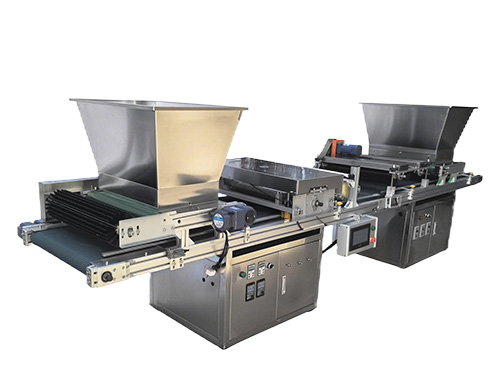
The XP750 seeder has stable performance, excellent product quality, simple and convenient o...
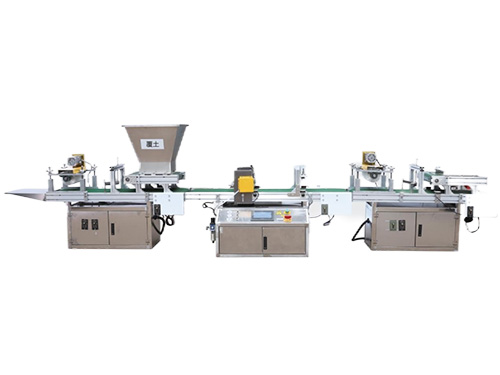
It adopts electrical integration and can be started by pressing the fully automatic button ...