


Understanding Root Controller Trays and Air Root Pruning Technology
2026-06-29 18:21:44
Introduction
Growing healthy seedlings begins long before seeds are placed into soil. The seed tray you choose shapes every stage of early plant development—from germination rates to root architecture at transplant time. Whether you operate a large commercial nursery or manage a small greenhouse operation, selecting the right tray can directly influence yield consistency and overall crop quality. The principles examined here draw on horticultural science research and manufacturer field experience to provide commercial growers with an evidence-based framework for seed tray decision-making.
Commercial seedling production is a precision operation where the choice of growing container directly affects the efficiency of every downstream process. Trays that are well-matched to their intended crop and growing conditions support uniform germination, healthy root development, and efficient transplant operations. Trays that are poorly matched create problems—root binding, uneven growth, transplant shock—that cost more to fix than the marginal price difference between a premium and an economy tray.

How Air Root Pruning Works Mechanically
Air root pruning is a horticultural technique that harnesses a natural plant physiological response to improve root architecture in containerized production. When a root tip encounters air at an open drainage hole or perforated cell wall, the exposed root tip undergoes desiccation and is pruned naturally at that point. This pruning event triggers the plant to produce multiple lateral root branches from the pruned zone, rather than continuing the single-root growth trajectory that leads to circling in conventional containers. The pruning mechanism operates through the plant hormone ethylene, which accumulates at the wound site when root tip tissue is exposed to air. Ethylene signals the root system to branch laterally rather than continuing the apical growth path. The result is a root architecture characterized by multiple fibrous lateral branches radiating from the pruned points—exactly the configuration that colonizes a transplant hole most effectively. This branching pattern increases the functional root surface area dramatically compared to non-pruned root systems of the same age. Root controller trays are specifically engineered to create these air pruning opportunities at predictable locations within each cell. By positioning open drainage holes or perforation patterns at the lower cell wall, the tray designer creates a defined air pruning zone where root tips are exposed each time the growing medium dries to field capacity. This predictable pruning pattern produces a consistent, uniform root architecture across all cells in a tray—a property that commercial growers value for its production consistency benefits.
Benefits for Transplant Shock Reduction
Transplant shock is the physiological disruption that occurs when a seedling is moved from a controlled greenhouse environment to an outdoor field setting. The primary stressors are root damage during tray removal, sudden environmental shifts in temperature and humidity, and adjustment to a new growing medium with a different microbial community. The visible symptoms—wilting, chlorosis, growth pause—represent the plant redirecting metabolic energy from growth to root regeneration. Seedlings produced in air-pruning root controller trays enter the transplant process with a pre-established fibrous root system that has already regenerated from multiple pruning events during the nursery phase. This repeated root regeneration experience effectively pre-adapts the seedling to the root disturbance inherent in the transplant process. When the seedling is removed from the root controller tray, the multiple lateral root branches are already in place and can resume function immediately upon exposure to the new growing medium, dramatically reducing the recovery period. Commercial field trial data from multiple crop types shows transplant shock symptoms resolving 30 to 50 percent faster in air-pruning format seedlings compared to standard format controls. For crops with tight market windows where early harvest translates directly to premium pricing, this acceleration in establishment time can represent significant revenue advantage. In field crops, faster establishment means the plants reach photosynthetic independence sooner, shortening the vulnerable window during which they are most susceptible to weed competition and environmental stress.
Structural Design of Root Controller Cells
The structural engineering of root controller cells balances air pruning functionality against mechanical durability and production efficiency. The most common design uses a cell with a tapered lower section terminating in an open bottom, with the drainage opening sized to create the air pruning exposure zone while preventing excessive growing medium loss. The taper angle must be steep enough to guide roots toward the opening but not so steep that it causes structural weakness in the tray. Perforated wall designs offer an alternative approach, using arrays of small holes in the lower cell walls to expose root tips to air at multiple positions along the cell circumference. This approach produces more distributed air pruning than the open-bottom design, creating a root architecture with lateral branches distributed throughout the lower cell volume rather than concentrated at a single depth point. The trade-off is in manufacturing complexity: perforated walls require more precise tooling and may be more prone to damage during handling. Material selection for root controller trays must account for the fact that the open-bottom or perforated design reduces structural section modulus compared to closed-bottom cells of the same wall thickness. Higher-impact polymer grades or glass-filled polymer formulations may be required to achieve adequate durability in root controller designs. A manufacturer experienced in root controller tray production will have optimized these material and design trade-offs based on accumulated field performance data.
Compatibility with Standard Tray Formats
Compatibility with standard tray formats is an important practical consideration for growers adopting root controller technology. The external footprint of root controller trays should match the standard tray formats already in use in the operation—identical external dimensions allow root controller trays to be used on the same benches, carts, and conveyors without modification. This backward compatibility enables a gradual adoption strategy where root controller trays are introduced for specific crops without disrupting the overall production system. Cell count compatibility is equally important. Root controller trays are available in standard cell counts ranging from 18 to 500 cells per tray, matching the range of conventional tray formats. When root controller trays are used alongside conventional trays in the same operation, maintaining consistent external dimensions allows both tray types to be processed on the same equipment, preventing the workflow fragmentation that would result from requiring separate handling procedures. Seeding compatibility must also be verified. Some root controller tray designs with open bottoms may require modified seeder needle or vacuum head configurations to ensure consistent seed placement at the correct depth. A manufacturer can provide seeding compatibility guidance and, in some cases, modified seeder accessories optimized for their root controller tray designs.
Best Practices for Air Root Pruning in Commercial Nurseries
Achieving the full benefits of air root pruning requires irrigation management practices that allow the growing medium to dry sufficiently between watering events to create the air pruning exposure cycle. In heavily automated drip irrigation systems where growing medium is kept continuously moist, root tips may not be exposed to air frequently enough to trigger consistent air pruning. Periodic drying cycles—or the use of ebb-and-flow irrigation systems that allow complete medium drying between cycles—are recommended to achieve the intended air pruning behavior. Growing medium selection for root controller trays should favor media with good structural stability when dry and sufficient coarseness to maintain the air-filled porosity that supports the air pruning mechanism. Finer-textured media may compact around the root pruning zone and reduce air exposure effectiveness. Coarse peat-based or bark-based media with perlite addition maintain the pore structure needed for effective air pruning across repeated drying cycles.
Conclusion
Commercial growers who invest time in understanding tray specifications and matching them to their specific production requirements consistently outperform those who purchase on price alone. The right tray supports every stage of the seedling production cycle—from initial sowing through field transplant—and pays dividends in reduced crop losses, lower labor inputs, and more consistent harvest timing. Whether you are sourcing trays as a first-time commercial buyer or reviewing your current supplier against market alternatives, the principles outlined here provide a framework for making evidence-based decisions that protect your production outcomes.
United States Department of Agriculture (USDA) Agricultural Marketing Service. (2023). Nursery and Greenhouse Production Guidelines. USDA.
American Society for Horticultural Science (ASHS). (2022). HortScience: Advances in Seedling Production Technology. ASHS.
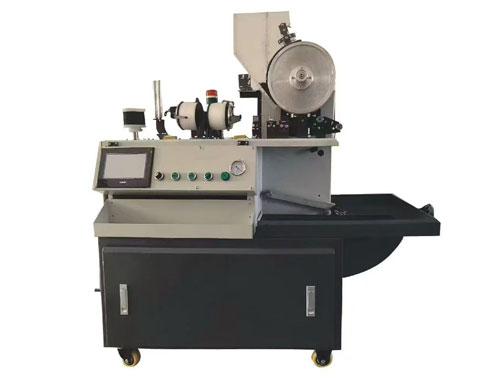
The CNC Seed Braiding Machine is a high-precision, fully automated agricultural equipment s...
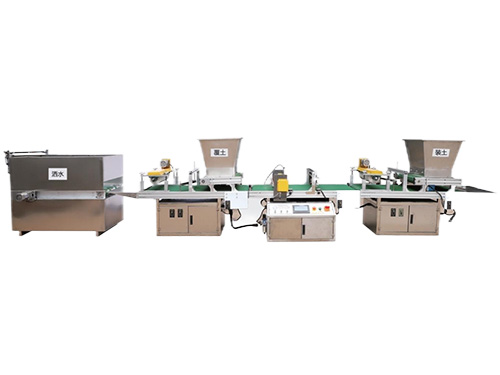
It adopts electrical integration and can be started by pressing the fully automatic button ...
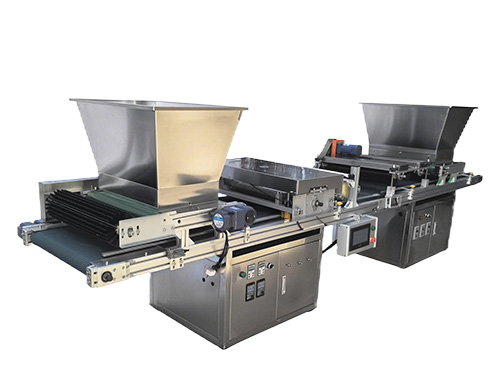
The XP750 seeder has stable performance, excellent product quality, simple and convenient o...
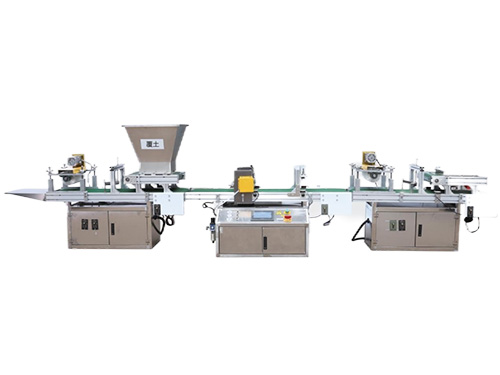
It adopts electrical integration and can be started by pressing the fully automatic button ...