


Seed Trays for Herbs and Microgreens: A Specialized Setup
2026-01-15 11:19:45
As a professional seed trays manufacturer with reliable production capacity and bulk supply capability, we understand that successful herb and microgreen cultivation begins long before harvest. One of the most critical yet often overlooked components is the seed tray.
Herbs and microgreens have unique growth characteristics that demand a specialized setup. From shallow root systems to rapid growth cycles, these crops require seed trays designed for precision, consistency, and efficiency. This article explores how specialized seed trays support optimal growth, key design considerations, and why manufacturer-level production expertise plays a vital role in large-scale supply.


Why Herbs and Microgreens Require Specialized Seed Trays
Herbs and microgreens differ from traditional crops in both scale and sensitivity. They are typically grown in dense patterns and harvested at an early stage, making uniform growth essential.
Specialized seed trays help by:
Providing consistent cell depth
Ensuring proper root aeration
Supporting uniform moisture distribution
Manufacturers with experience in seed tray production design trays that align with the biological needs of these fast-growing plants.
Understanding Seed Tray Cell Design
Cell size and shape are crucial factors when selecting seed trays for herbs and microgreens. Shallow, evenly spaced cells are often preferred because they:
Promote rapid root establishment
Prevent excessive root binding
Allow easy harvesting
During production, precise mold design ensures uniform cell dimensions, which directly impacts crop consistency across large batches.
Material Selection for Seed Trays
The materials used in seed tray manufacturing affect durability, hygiene, and plant health. Common materials include high-quality plastics designed for repeated use and easy cleaning.
Key material considerations include:
Resistance to cracking or deformation
Smooth surfaces to reduce pathogen buildup
Compatibility with automated production systems
Manufacturers producing seed trays in bulk prioritize material consistency to maintain performance across multiple production cycles.
Drainage and Moisture Control
Proper drainage is essential for herbs and microgreens, as excess moisture can lead to fungal growth and poor root development.
Specialized seed trays incorporate:
Strategically placed drainage holes
Even water flow across the tray
Compatibility with bottom-watering systems
These features are often refined through production testing to ensure reliable performance under commercial growing conditions.
Optimizing Space and Yield
Herb and microgreen operations often operate in limited space, such as indoor farms or greenhouse racks. Seed trays designed for efficient space usage help maximize yield per square meter.
Benefits include:
Uniform tray dimensions for stacking
Lightweight construction for easy handling
Compatibility with standard shelving systems
Manufacturers with scalable production processes ensure tray dimensions remain consistent across bulk orders, supporting smooth workflow integration.
Supporting Automation and Large-Scale Production
As herb and microgreen production scales up, automation becomes increasingly important. Seed trays must be compatible with automated seeding, watering, and harvesting equipment.
Manufacturer-level design advantages include:
Standardized tray profiles
Reinforced edges for machine handling
Precision manufacturing tolerances
These factors reduce downtime and improve efficiency in automated production environments.
Hygiene and Reusability Considerations
Maintaining cleanliness is critical in herb and microgreen production due to their short growth cycles and direct consumption.
Well-designed seed trays support hygiene by:
Allowing easy cleaning and sanitization
Minimizing debris accumulation
Maintaining structural integrity after repeated use
Manufacturers with controlled production environments test trays for durability and sanitation compatibility before large-scale supply.
Why Manufacturer-Level Production Matters
Not all seed trays deliver the same performance. Choosing seed trays from a manufacturer with established production expertise and bulk supply capability ensures consistent quality, reliable availability, and long-term usability.
Key manufacturer advantages include:
Stable production capacity for large orders
Quality control across every production batch
Customization options for specific crops or systems
These factors are especially important for commercial growers and distributors.
Conclusion
Understanding the role of seed trays for herbs and microgreens is essential for achieving consistent growth and high yields. From cell design and material selection to drainage and automation compatibility, a specialized setup can significantly improve production outcomes.
As a seed trays manufacturer with scalable production and bulk supply capabilities, focusing on precision manufacturing, durable materials, and standardized design ensures that seed trays meet the demands of modern herb and microgreen cultivation. Investing in the right seed trays is a foundational step toward efficient, hygienic, and sustainable production.
References
GB/T 7714:Resh H M. Hydroponic food production: a definitive guidebook for the advanced home gardener and the commercial hydroponic grower[M]. CRC press, 2022.
MLA:Resh, Howard M. Hydroponic food production: a definitive guidebook for the advanced home gardener and the commercial hydroponic grower. CRC press, 2022.
APA:Resh, H. M. (2022). Hydroponic food production: a definitive guidebook for the advanced home gardener and the commercial hydroponic grower. CRC press.
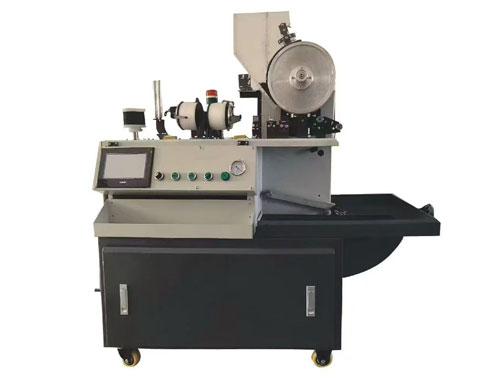
The CNC Seed Braiding Machine is a high-precision, fully automated agricultural equipment s...
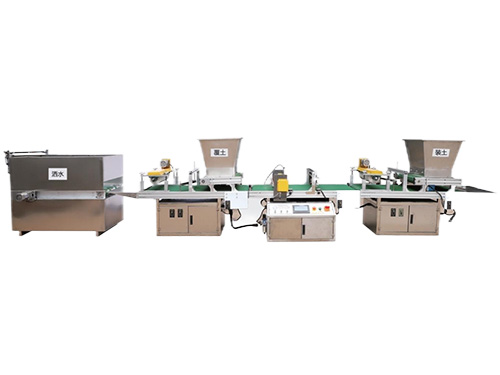
It adopts electrical integration and can be started by pressing the fully automatic button ...
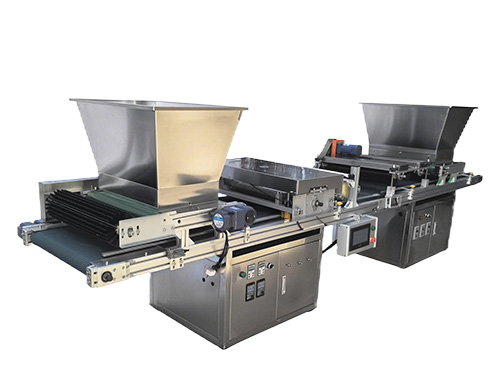
The XP750 seeder has stable performance, excellent product quality, simple and convenient o...
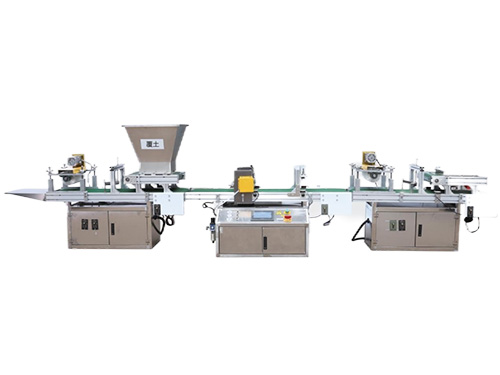
It adopts electrical integration and can be started by pressing the fully automatic button ...