


Irrigation Management Strategies for Seedling Tray-Based Production
2026-07-09 16:15:13
Introduction
Irrigation is the most frequently adjusted cultural practice in seedling production, and the decision of when, how much, and how to water directly determines whether seedlings achieve their genetic growth potential or are stressed into sub-optimal development. For commercial operations managing thousands of trays simultaneously, achieving uniform irrigation across the entire production area is as important as getting the average irrigation rate right.
The seed tray is not a passive container in the irrigation equation—it is an active component that mediates between the irrigation system and the plant. Tray design, cell geometry, drainage specifications, and the growing medium contained within all interact with irrigation management to determine the actual water availability at the root zone.
Understanding Plant Water Demand at the Seedling Stage
Seedlings have fundamentally different water requirements than mature plants because their leaf area is small, their root systems are confined to the cell volume, and their stomatal regulation mechanisms are still developing. During the first two weeks after germination, seedlings rely primarily on water stored in the seed and in the growing medium immediately surrounding the seed, and they are highly susceptible to both drought stress from under-watering and oxygen deprivation from over-watering. As seedlings develop beyond the germination phase, their water demand increases with expanding leaf area and root system volume. The transition from cotyledon expansion to true leaf development marks a critical shift when irrigation frequency must increase to support the accelerating growth rate. Operations that set irrigation schedules based on the needs of established seedlings and apply those schedules to recently germinated trays in the same zone will systematically over-water the young seedlings. Stage-specific irrigation management—adjusting irrigation frequency and volume based on the developmental stage of the seedling rather than applying uniform watering across all growth stages—is one of the most impactful operational improvements available to commercial seedling producers. Implementing stage-specific irrigation requires either physical zoning of trays by age, or a variable-frequency irrigation system that can deliver different watering volumes to different zones.
Irrigation Methods for Tray-Based Production: Overhead, Drip, and Ebb-Flow
Overhead irrigation via misting systems or overhead sprinklers is the most widely used irrigation method for seedling tray production, particularly in the germination and early seedling phases. Mist systems deliver fine water droplets at low volumes, providing gentle moisture to the growing medium surface without disturbing seeds or newly emerged seedlings. The primary challenge with overhead irrigation is achieving uniform distribution across large tray populations—variations in nozzle output, pressure variation across the production area, and interception of water droplets by plant canopy all contribute to non-uniform application. Drip irrigation delivers water directly to each cell or to each tray through individual drip emitters, providing the highest level of irrigation control and uniformity. Drip systems eliminate the canopy interception and distribution uniformity problems of overhead systems, but they require individual emitter placement or premade drip tape with close emitter spacing, both of which add labor and material cost. Drip irrigation is most economical for low cell count, high-value crop production where the per-plant value justifies the system investment. Ebb-and-flow or flood-floor irrigation systems fill a bench or floor to a controlled depth with nutrient or irrigation solution, allow the medium to absorb water through capillary action from the bottom, and then drain the system completely. This sub-irrigation approach provides highly uniform water application and eliminates canopy wetness that promotes disease, but it requires trays with adequate drainage hole sizing to allow rapid fill and drain cycles without prolonged saturation.
How Tray Drainage Specifications Determine Irrigation Frequency
The irrigation frequency required for a given tray format is determined by the drainage rate of the cells, the water-holding capacity of the growing medium, and the evapotranspiration rate of the seedling. Cells with high drainage rates dry out faster between irrigation events than cells with restricted drainage, which means that the same tray format can require different irrigation frequencies depending on whether it uses large, fast-draining holes or smaller, more restricted drainage openings. Growing medium selection interacts with irrigation frequency in the same way. Coarse-textured growing media with high air-filled porosity drain faster and require more frequent irrigation than fine-textured media with higher water-holding capacity. Matching medium selection to the irrigation system capacity—selecting media that drain at rates compatible with the irrigation cycle duration—is a fundamental design decision that affects irrigation management efficiency throughout the production cycle. A manufacturer can provide guidance on the effective drainage rates of their tray designs under different irrigation configurations, helping operations calibrate their irrigation scheduling to the specific tray-medium combination in use. This technical support is particularly valuable during the system design phase, when irrigation parameters can be optimized before the production season begins.
Zone-Based Irrigation Management for Large Commercial Operations
Large commercial operations growing multiple tray formats simultaneously face the challenge of providing appropriate irrigation to all tray types from a single or limited number of irrigation zones. The typical resolution is to divide the operation into irrigation zones based on water demand characteristics—grouping trays with similar cell volume, growing medium, and developmental stage into zones that receive the same irrigation schedule. Zone-based irrigation management requires initial investment in zone hardware—separate valve circuits, pressure regulators, and ideally zone-specific flow meters that track water application by zone—but reduces water waste and crop stress from over- or under-watering in zones with different water demand profiles. The water cost savings alone can repay the zone hardware investment within two to three production seasons in water-constrained regions. Sensor-based irrigation control using soil moisture sensors or lysimeters placed in representative trays provides real-time feedback on actual water status, enabling irrigation scheduling that responds to actual plant demand rather than estimated demand. This approach is particularly valuable in operations with high environmental variability, where evapotranspiration rates shift significantly day to day based on weather conditions.
Water Quality Considerations and Their Interaction with Tray Management
Water quality for seedling irrigation affects both plant health and tray material performance. High alkalinity in the source water—common in groundwater from limestone aquifers—causes the pH of the growing medium to rise over successive irrigation events, requiring acid injection or acidified fertilizer programs to maintain the slightly acidic root zone pH that most seedlings prefer. Seedling trays with high surface area and complex cell geometry are more prone to alkalinity scaling buildup that can affect drainage performance over time. High salinity in irrigation water, common in areas with limited freshwater availability, causes osmotic stress in seedlings that reduces growth rates and nutrient uptake efficiency. Operations using high-salinity water should select growing media with high leaching fractions and irrigation schedules that include periodic heavy watering to flush salts through the root zone, which requires trays with generous drainage capacity to handle the increased water volumes. Seedling tray materials are generally compatible with the water quality conditions encountered in most commercial horticultural operations, but specific water quality parameters—extreme pH, very high alkalinity, or high manganese concentrations—should be reviewed against the tray material specification to ensure long-term compatibility and to identify any adjustments to the irrigation management program that may be needed to account for water quality interactions.
Conclusion
Commercial growers who understand the full scope of factors affecting their seedling tray performance—and who work with suppliers and manufacturers that provide genuine technical depth rather than just catalog products—consistently achieve better production outcomes than those who treat tray selection as a commodity decision. The investment of time and attention in understanding tray science and matching specifications to operational requirements pays compounding returns across every production cycle and every market season.
Cornell University College of Agriculture and Life Sciences. (2021). Optimizing Seedling Production in Controlled Environments. Cornell CALS.
Australian Institute of Horticulture. (2023). Nursery Production Standards and Guidelines. Australian Horticulture.
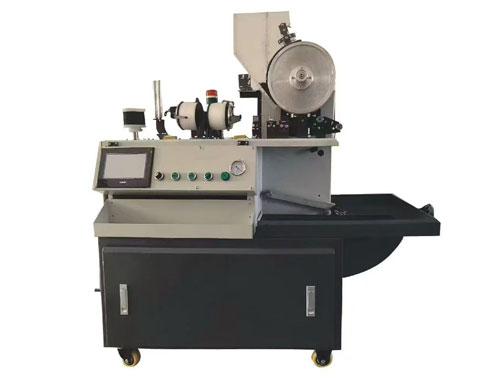
The CNC Seed Braiding Machine is a high-precision, fully automated agricultural equipment s...
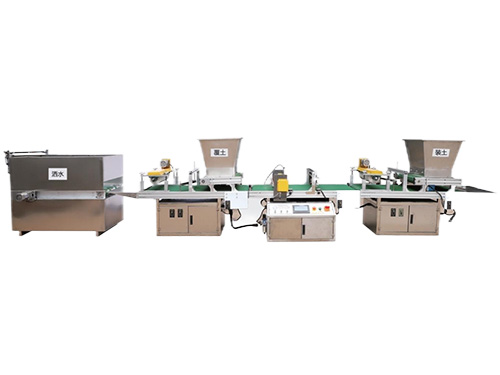
It adopts electrical integration and can be started by pressing the fully automatic button ...
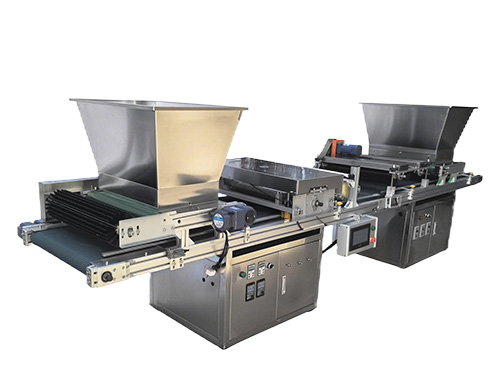
The XP750 seeder has stable performance, excellent product quality, simple and convenient o...
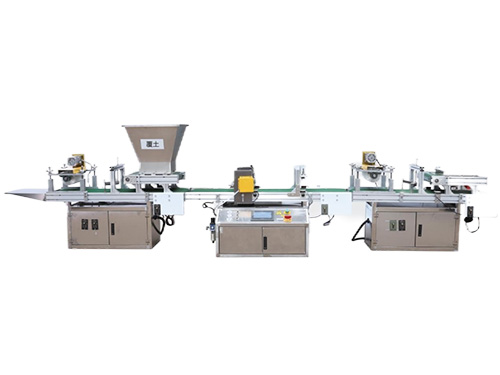
It adopts electrical integration and can be started by pressing the fully automatic button ...