


Automatic Seedling Seeder: How to Choose the Right Machine for Your Nursery
2026-09-22 14:31:59
As commercial seedling production scales, manual seeding becomes a bottleneck. Hand-seeding is slow, inconsistent and labor-intensive — and labor is the largest variable cost in most nurseries. An automatic seedling seeder converts a tedious manual process into a precise, repeatable production line, delivering uniform seed placement at a fraction of the labor cost.

But seeders are not one-size-fits-all. The right machine depends on your tray type, cell count, seed size, target throughput and budget. Choosing incorrectly can strand you with a machine that jams on your seed variety or fails to match your tray geometry.
This guide walks through the key decision factors so you can select a seedling seeder that fits your operation and scales with it.
Why Automation Is Transforming Seedling Production
Commercial nurseries face mounting pressure to produce more seedlings with less labor and higher consistency. Automated seeders answer this directly. A single operator running a fully automatic seeder can fill and seed thousands of cells per hour — work that would otherwise require a full team of hand-seeders.
Beyond speed, automation delivers consistency. Uniform seed depth and spacing produce even germination, which translates to uniform seedlings, simplified transplanting and better downstream yield. In an industry where a 5% germination improvement can shift profitability, this consistency is the real payoff.
Manual vs Semi-Automatic vs Fully Automatic Seeders
| Type | Throughput | Labor | Best For |
|---|---|---|---|
| Manual seeder | Low | High | Small nurseries, diverse crops |
| Semi-automatic | Medium | Medium | Mid-size operations, mixed tray types |
| Fully automatic | High | Low | High-volume plug production |
Manual seeders are inexpensive and flexible but cap your output. Semi-automatic machines automate the seeding stroke while an operator feeds trays, striking a balance between cost and throughput. Fully automatic lines integrate tray filling, seeding, covering and watering into one continuous process — ideal for nurseries producing millions of plugs annually.
Key Specifications That Determine Seeder Performance
When comparing seeders, focus on the specifications that affect your daily output:
Seeding capacity: Measured in trays per hour; verify against your peak-season demand.
Seed size range: Machines use drum, vacuum or needle mechanisms — each handles different seed sizes. Confirm the seeder can handle your seed mix.
Singulation accuracy: The percentage of cells receiving exactly one seed. Higher accuracy means less thinning labor later.
Cell count compatibility: The seeder must align its nozzles or drum to your tray's cell layout.
Changeover time: How quickly you can switch between seed types or tray sizes.
Matching the Seeder to Tray Type and Cell Count
Your seedling trays and your seeder must be designed to work together. A seeder calibrated for a 72-cell tray will misalign on a 128-cell tray unless it supports quick adjustment. Before buying, confirm the machine handles your full range of tray cell counts and that your PET or PS trays are dimensionally consistent enough for reliable machine handling.
Many growers standardize on a single tray format to simplify automation. If you run multiple cell counts, prioritize seeders with tool-free changeover and interchangeable seeding plates or drums.
Throughput, Accuracy and Labor Cost Savings
The economic case for automation rests on two numbers: output per labor hour and singulation accuracy. A semi-automatic seeder can seed 300–600 trays per hour with one operator, while a fully automatic line can exceed 1,000 trays per hour. Over a full season, the labor savings alone often recover the equipment cost within one to two years.
Accuracy matters just as much as speed. Machines that routinely double-seed force you to spend labor on thinning. A seeder that achieves 90%+ singulation accuracy pays for itself in reduced hand-work downstream.
Integration with Filling and Conveyor Lines
Fully automatic seeders rarely operate in isolation. They sit within a line that includes a tray destacker, a substrate filling station, the seeding unit, a covering unit and an irrigation boom. When planning your investment, consider how the seeder integrates with these stages — both today and as your operation grows.
Modular systems let you start with a standalone seeder and add filling or conveying modules later, protecting your initial investment while leaving room to expand capacity.
How to Evaluate a Seeder Supplier
A seeder is a long-term capital investment, so supplier support matters. Evaluate potential suppliers on their ability to provide installation guidance, spare parts, technical support and — ideally — compatibility with your existing trays. A manufacturer that also produces seedling trays and nursery equipment can offer a matched system with fewer integration headaches.
Haode New Material manufactures automatic seedling seeders alongside its full range of seedling trays, helping growers build a consistent, compatible production line from a single source.
Frequently Asked Questions
What is the difference between a semi-automatic and fully automatic seeder?
A semi-automatic seeder automates the seeding action while an operator feeds trays; a fully automatic line also automates tray filling, covering and watering for continuous production.
Can one seeder handle different seed sizes?
Most modern seeders support a range of seed sizes through interchangeable drums or needles, but you should verify the machine covers your specific seed mix before purchase.
How many trays per hour can an automatic seeder process?
Depending on the model, semi-automatic seeders handle roughly 300–600 trays per hour, while fully automatic lines can exceed 1,000 trays per hour.
Do I need to buy specific trays for my seeder?
Seeders work best with dimensionally consistent trays. Standardizing on a compatible tray format improves alignment and reduces misfeeds.
What is singulation accuracy and why does it matter?
Singulation accuracy is the percentage of cells receiving exactly one seed. Higher accuracy reduces the labor needed to thin double-seeded cells.
How quickly will an automatic seeder pay for itself?
Many nurseries recover the cost of a seeder through labor savings within one to two years, depending on throughput and local labor costs.
Conclusion
An automatic seedling seeder is one of the highest-leverage investments a commercial nursery can make. By matching the machine to your tray format, seed mix and throughput targets, you gain speed, consistency and lower labor costs — the foundation of a scalable seedling operation.
Explore matched seeder and tray solutions at haodeseedtray.com to build a production line that grows with your business.
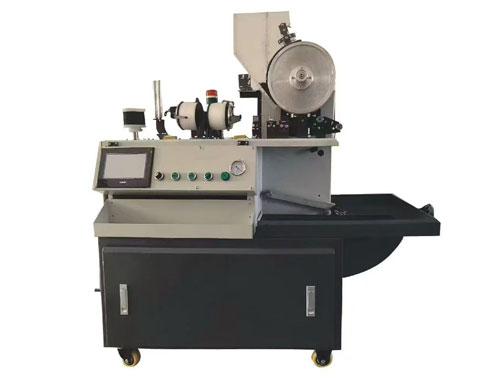
The CNC Seed Braiding Machine is a high-precision, fully automated agricultural equipment s...
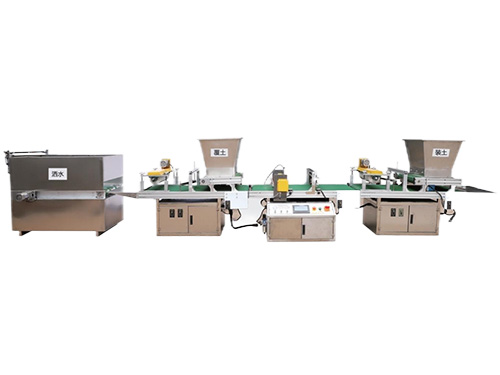
It adopts electrical integration and can be started by pressing the fully automatic button ...
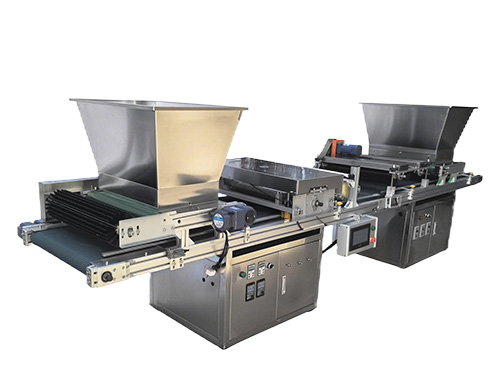
The XP750 seeder has stable performance, excellent product quality, simple and convenient o...
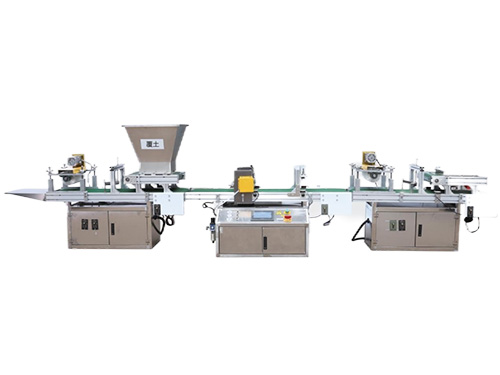
It adopts electrical integration and can be started by pressing the fully automatic button ...