


LED Grow Lights for Seedling Production: Spectrum, Intensity & Photoperiod Guide
2026-08-28 16:38:36
Supplemental lighting has become an essential tool in modern nursery operations. Whether you're growing vegetable transplants in winter, extending the growing season in a northern greenhouse, or maintaining year-round plug production, LED grow lights for seedling production give you precise control over one of the most critical environmental variables: light. This guide covers the three pillars of effective seedling lighting—spectrum, intensity, and photoperiod—along with practical recommendations for plug tray setups.
Why Light Matters in Seedling Production
Seedlings are uniquely sensitive to light conditions. During the early germination and cotyledon stage, they require less intensity but are highly responsive to spectral quality. As true leaves emerge and the photosynthetic machinery matures, demand for both light quantity and quality increases sharply.
Poor lighting leads directly to measurable losses: leggy, stretched stems, weak root systems, delayed transplant maturity, and increased susceptibility to disease and transplant shock. In a commercial nursery running thousands of plug trays per cycle, even a 5% quality reduction represents significant wasted seed, labor, and growing media.
LED technology has transformed what's possible. Compared to older high-pressure sodium (HPS) and metal halide (MH) lamps, modern LED fixtures consume 40–60% less electricity, run cooler (reducing heat stress on seedlings), and allow growers to dial in exact spectral recipes for each growth stage.
Light Spectrum: Choosing the Right LED Configuration
Full-Spectrum vs. Red-Blue LED Lights
The debate between full-spectrum and targeted red-blue LED lighting is one of the most common questions in nursery LED adoption.
Red-blue LED lights (sometimes called "blurple" fixtures) emit light primarily at 630–660 nm (red) and 440–460 nm (blue). These two wavelengths correspond to the peak absorption peaks of chlorophyll a and b, making them highly energy-efficient for photosynthesis. Red-dominant spectra also promote stem elongation, which some growers use intentionally to stretch seedlings under low-intensity supplemental lighting.
Full-spectrum LED lights mimic natural daylight by including green (500–560 nm), white, and even far-red (700–750 nm) wavelengths. While green light contributes less to photosynthesis directly, it improves visual assessment of plant health, penetrates deeper into dense canopy foliage, and plays a role in shade-avoidance signaling via photoreceptors like phytochrome and phototropin.
The Role of Far-Red Light
Recent research has highlighted the importance of far-red light (700–760 nm) in seedling morphology. Adding 10–20% far-red to the spectrum can increase leaf expansion and stem diameter, producing stockier, more robust seedlings that establish faster after transplanting. Many newer LED fixtures now include far-red channels specifically for this purpose.
Light Intensity: Understanding PPFD for Seedlings
Light intensity for plant growth is measured in Photosynthetic Photon Flux Density (PPFD), expressed in μmol/m²/s. Getting PPFD right for your seedling stage is the single most impactful adjustment you can make.
Here are the generally recommended PPFD ranges for common seedling types:
Germination / cotyledon stage: 80–150 μmol/m²/s — Too much light too early causes stress and inhibits germination in some species.
Early vegetative growth (first true leaves): 150–300 μmol/m²/s — This is the sweet spot for most vegetable and herb seedlings in plug trays.
Advanced vegetative / pre-transplant: 300–500 μmol/m²/s — Supports rapid biomass accumulation and prepares seedlings for outdoor light levels.
Need High-Quality Seedling Trays for Your Grow Room?
Haode PET seedling trays are engineered for uniform cell drainage, root aeration, and smooth deplugging—optimized for LED grow room and greenhouse environments.
View Seedling Tray Products →Avoid exceeding 600 μmol/m²/s for very young seedlings. Excess light intensity leads to photoinhibition, visible as purpling of leaves (anthocyanin accumulation), leaf curling, and stunted growth. If your PPFD measurements show values above this threshold at tray level, raise the fixtures or reduce the fixture output.
Measurement tip: Use a PAR (quantum) sensor to map PPFD distribution across your tray bench. LED light output drops sharply toward the edges of the coverage area—don't assume uniform intensity across a standard 10×20-inch tray layout.
Photoperiod: Building the Right Light Schedule
Seedlings grown under supplemental lighting require longer photoperiods than mature plants because they are investing heavily in building photosynthetic tissue rather than fruiting or blooming. The standard recommendation for most nursery seedlings is:
14–18 hours of light per day
6–10 hours of uninterrupted darkness
A 16-hour photoperiod (e.g., 6:00 AM – 10:00 PM) is the most common default for vegetable seedlings in commercial production. Some ornamental growers use 18-hour days for rapid crop turnaround.
Dark period is not optional. Plants respire at night, breaking down carbohydrates accumulated during the day. A continuous dark period of at least 6 hours is essential for proper carbohydrate metabolism and to prevent the "etiolation" response—excessive stem elongation in search of light—that produces weak, unmarketable seedlings.
For operations running multiple light cycles (e.g., staggered seeding schedules), LED fixtures with dimming capability allow you to run different intensity programs across the same bench without changing fixture height.
Choosing an LED System for Plug Tray Production
When selecting an LED grow light system for plug tray production, consider these practical factors:
Fixture form factor: Bar-style linear fixtures distribute light more evenly over narrow tray rows than round-point fixtures, which tend to produce hot spots at center and low intensity at edges.
Dimmability and zoning: Choose fixtures with 0–10V or DALI dimming so you can match intensity to seedling age across different zones of the same bench.
Water and chemical resistance: Greenhouse environments are humid and often treated with overhead irrigation or pesticide sprays. Fixtures should have at least an IP65 rating.
Heat output: LEDs run cooler than HPS/MH, but high-output arrays still generate heat. Maintain at least 15 cm clearance above the seedling canopy, and consider the cumulative heat load in your greenhouse climate management.
Spectrum tunability: If you grow diverse crop types (leafy greens, solanaceous crops, ornamentals), fixtures with independently controllable red, blue, white, and far-red channels give you maximum flexibility.
Integrating LED Lighting with Your Tray System
The quality of your seedling tray directly affects how much benefit you get from optimized lighting. Uniform cell density, consistent tray depth, and proper drainage all contribute to even germination and growth under LED fixtures. Trays with uneven cell fill or poor drainage create micro-variation in moisture and root competition that no amount of light adjustment can fully correct.
Haode's PET seedling trays are designed with precision-engineered cell geometry that promotes uniform root development across all cells—a critical factor when running tight photoperiod schedules in controlled environments. Combined with an appropriate LED program, this ensures that every cell in a 128-cell or 288-cell plug tray reaches transplantable size on the same day.
FAQs: LED Grow Lights for Seedling Production
What is the best LED light spectrum for seedlings?
Full-spectrum LED lights with a red-to-blue ratio of roughly 3:1 to 5:1 are ideal for seedling production. Red light (660 nm) promotes stem elongation and leaf expansion, while blue light (450 nm) regulates leaf expansion and chlorophyll development. Many growers start with predominantly red spectrum and add blue as seedlings mature.
What PPFD level do seedlings need?
Most seedlings thrive at 150–300 μmol/m²/s PPFD during the early growth stage. As seedlings develop true leaves, intensity can increase to 300–500 μmol/m²/s. Avoid exceeding 600 μmol/m²/s for very young seedlings, as excessive light causes stress, wilting, and purple-tinged leaves.
How many hours of light do seedlings need per day?
Seedlings generally need 14–18 hours of light per day. A 16-hour photoperiod is a reliable standard for most vegetable and ornamental seedlings in plug trays. Darkness is equally important—ensure at least 6 hours of uninterrupted dark to allow for respiration and prevent spindly growth.
Can I use red-blue LED grow lights for all seedling types?
Red-blue LEDs work well for most vegetable and herb seedlings. However, ornamental seedlings with high aesthetic value (poinsettias, petunias) often develop better morphology under full-spectrum light that includes green and far-red wavelengths. Full-spectrum lights also help nursery staff assess plant health and color more accurately.
How close should LED grow lights be to seedling trays?
For high-light LED fixtures, position them 30–60 cm above the seedling canopy. For lower-output or bar-style LEDs, maintain 15–30 cm clearance. As seedlings grow, raise the lights gradually to maintain consistent PPFD at the leaf surface. Use a quantum sensor to verify intensity across the tray.
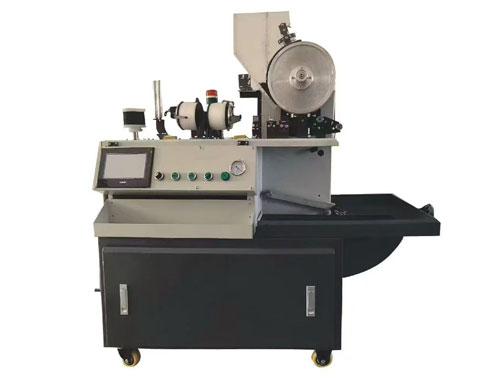
The CNC Seed Braiding Machine is a high-precision, fully automated agricultural equipment s...
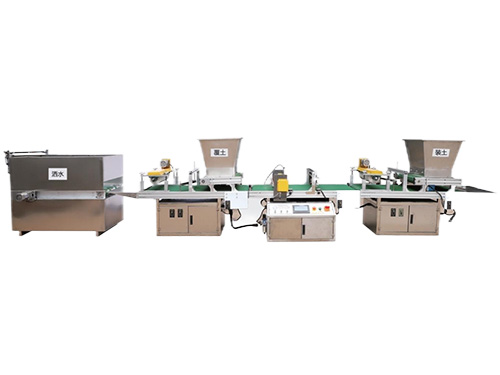
It adopts electrical integration and can be started by pressing the fully automatic button ...
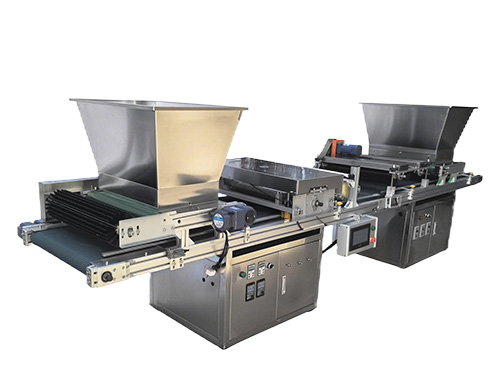
The XP750 seeder has stable performance, excellent product quality, simple and convenient o...
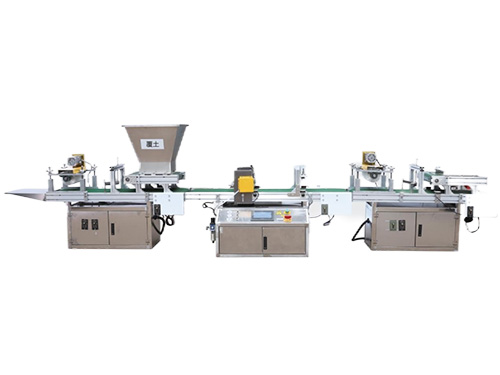
It adopts electrical integration and can be started by pressing the fully automatic button ...