
垂直农业中的排水垫:智能水资源管理
2026-01-04 14:18:12
Drainage mat systems have become a foundational component in modern vertical farming, where precise water control and root-zone management are essential for consistent crop performance. In controlled indoor environments, even minor imbalances in moisture distribution can lead to root stress, reduced oxygen availability, or nutrient inefficiencies. As a result, drainage mat solutions are increasingly engineered as functional infrastructure rather than passive accessories.
From a manufacturer and production perspective, drainage mat products are designed to support large-scale cultivation systems while maintaining uniform performance across bulk supply. This article examines how drainage mat technology contributes to smart water management in vertical farming and how design and production considerations align with commercial-scale operations.


The Role of Drainage Mats in Vertical Farming Systems
Vertical farming relies on stacked growing layers, artificial lighting, and closed-loop irrigation. In such systems, excess water must be removed efficiently to prevent root saturation and structural stress.
Drainage mat solutions provide:
·Controlled water runoff from growing surfaces
·Enhanced root-zone aeration
·Protection for underlying structural layers
·Improved hygiene and moisture separation
Unlike traditional horizontal farming, vertical systems demand drainage mats with predictable hydraulic behavior and consistent physical properties across every layer.
Smart Water Management Through Controlled Drainage
Balancing Moisture Retention and Runoff
Effective water management in vertical farming is not about maximum drainage, but about balance. A well-designed drainage mat allows excess water to exit while maintaining sufficient moisture for root uptake.
Key functional characteristics include:
·Defined flow channels for excess water
·Surface structures that prevent water pooling
·Compatibility with drip or ebb-and-flow irrigation
In production-level drainage mat manufacturing, maintaining consistent flow performance across large quantities is essential for system reliability.
Structural Design of Drainage Mats
Core Layer and Channel Configuration
The internal structure of a drainage mat determines how water moves across and away from the root zone. Channel geometry, spacing, and depth all influence drainage efficiency.
Customized drainage mat designs consider:
·Load-bearing capacity under stacked systems
·Resistance to compression over time
·Uniform channel formation during production
For vertical farms operating at scale, structural consistency ensures identical water behavior across all cultivation levels.
Material Selection for Vertical Farming Environments
Durability, Hygiene, and Stability
Material choice plays a critical role in drainage mat performance. Vertical farming environments expose materials to continuous moisture, nutrient solutions, and cleaning cycles.
Material considerations include:
·Resistance to microbial growth
·Dimensional stability under constant load
·Long service life in humid conditions
From a manufacturer standpoint, materials must support stable production output while meeting the functional demands of intensive farming operations.
Integration with Root-Zone Management
Drainage mats work in conjunction with growing media, trays, or panels. Their function directly influences oxygen availability and root development.
Effective integration helps:
·Reduce root hypoxia
·Prevent nutrient solution stagnation
·Improve uniformity across plant batches
In large vertical farms, drainage mat integration contributes to predictable crop cycles and reduced variability between growing zones.
Water Recycling and System Efficiency
Modern vertical farming emphasizes sustainability through water reuse. Drainage mats facilitate clean and controlled water collection, enabling efficient filtration and recirculation.
System-level benefits include:
·Reduced water waste
·Lower nutrient loss
·Easier system monitoring
For farms operating with automated control systems, drainage mats support data-driven irrigation management by stabilizing baseline drainage behavior.
Manufacturing and Production Considerations
Designing drainage mats for vertical farming requires alignment between functional performance and scalable production. Tooling accuracy, material consistency, and repeatable processes are critical.
Production-focused design factors include:
·Uniform thickness across batches
·Repeatable channel geometry
·Stackability for logistics and bulk supply
A drainage mat developed for manufacturer-level production ensures that performance characteristics remain stable across large shipment volumes.
Quality Control and Performance Consistency
In vertical farming, inconsistencies at the material level can scale into system-wide inefficiencies. Quality control during drainage mat production focuses on maintaining tight tolerances and predictable behavior.
Key quality metrics include:
·Compression resistance
·Drainage rate consistency
·Surface integrity
This level of control supports long-term reliability for farms relying on bulk quantities of drainage mats.
Conclusion: Drainage Mats as Smart Infrastructure
Drainage mat systems are a critical element of smart water management in vertical farming. By controlling moisture movement, supporting root health, and enabling efficient water reuse, drainage mats contribute directly to productivity and system stability.
From a manufacturer and bulk production perspective, well-engineered drainage mats combine material science, structural design, and scalable manufacturing. When integrated effectively, drainage mats function as intelligent infrastructure—supporting consistent performance, reliable supply, and long-term success in vertical farming environments.
References
GB/T 7714:Shamshiri R, Kalantari F, Ting K C, et al. Advances in greenhouse automation and controlled environment agriculture: A transition to plant factories and urban agriculture[J]. International Journal of Agricultural and Biological Engineering, 2018, 11(1): 1-22.
MLA:Shamshiri, Ramin, et al. "Advances in greenhouse automation and controlled environment agriculture: A transition to plant factories and urban agriculture." International Journal of Agricultural and Biological Engineering 11.1 (2018): 1-22.
APA:Shamshiri, R., Kalantari, F., Ting, K. C., Thorp, K. R., Hameed, I. A., Weltzien, C., ... & Shad, Z. M. (2018). Advances in greenhouse automation and controlled environment agriculture: A transition to plant factories and urban agriculture. International Journal of Agricultural and Biological Engineering, 11(1), 1-22.
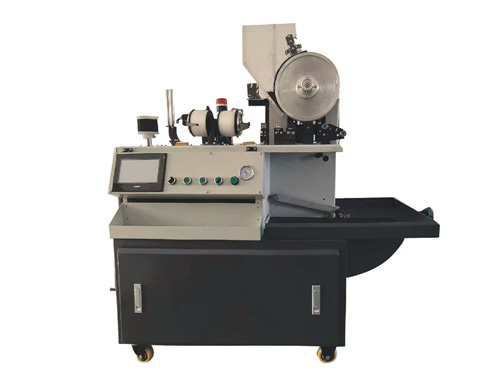
种子编织机采用电气一体化,按触摸屏上全自动按钮一键启动,穴盘放...
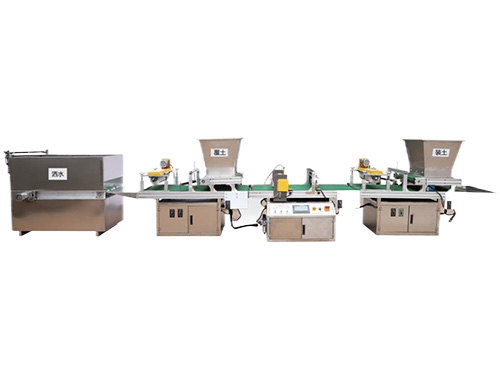
采用电气一体化,按触摸屏上全自动按钮一键启动,穴盘放在传输带上...
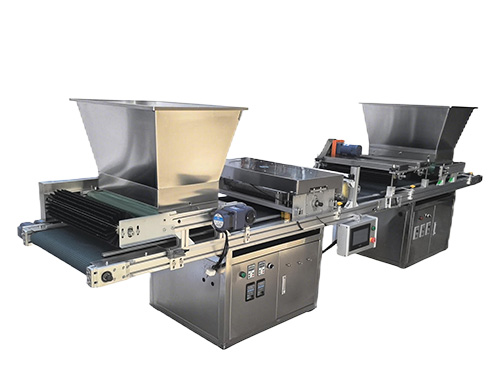
XP750型 播种机性能稳定,品质量优良良,操作简单便捷,高速细致。...
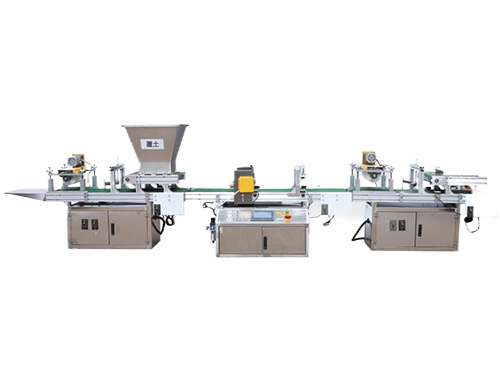
采用电气一体化,按触摸屏上全自动按钮一键启动,穴盘放在传输带上...